
Introduction
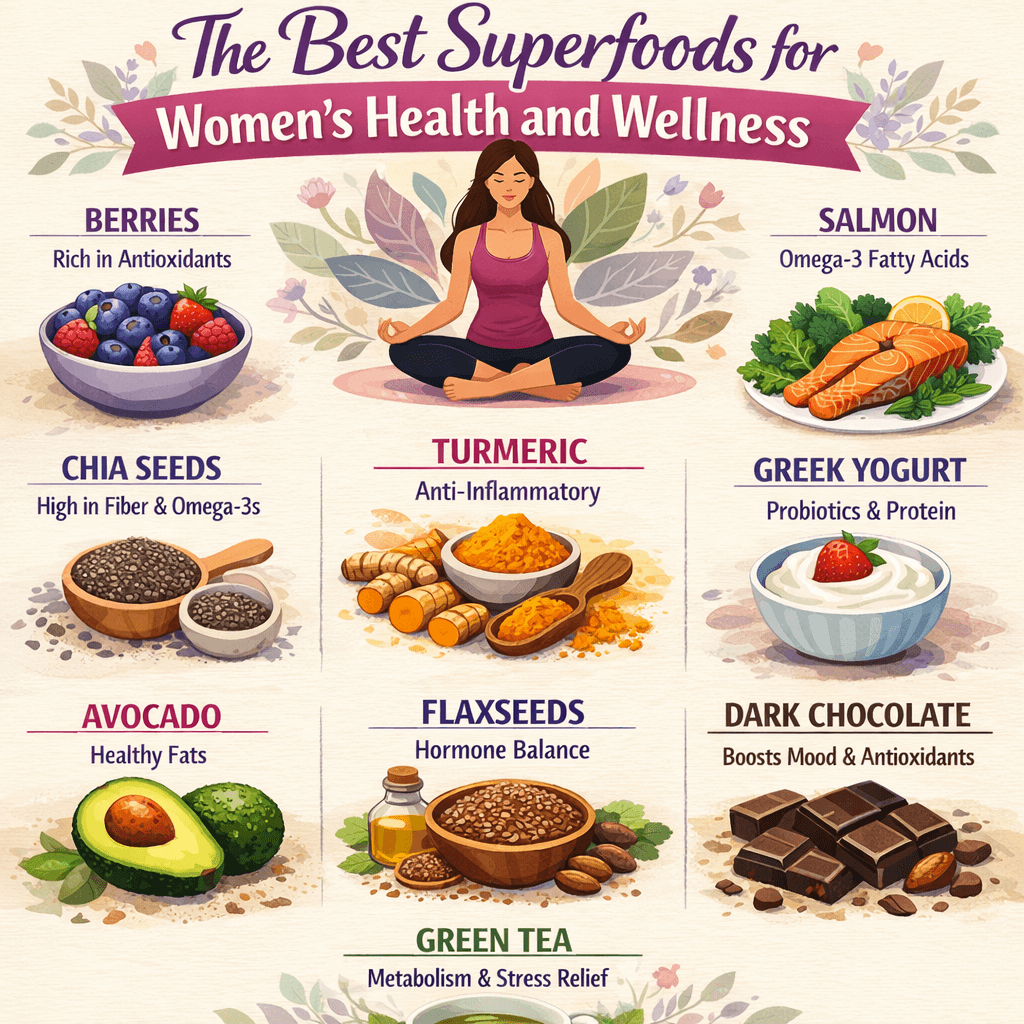
Good nutrition is essential for every woman at every stage of life. What you eat affects your hormones, energy, immunity, mood, skin, and long-term wellness. Women face unique health needs—from menstrual cycles and pregnancy to perimenopause and aging. Choosing the best superfoods for women can help support those needs naturally.
Many women struggle with low energy, hormonal imbalance, weakened immunity, or stress. The right foods, rich in nutrients and antioxidants, can make a real difference. This guide is science-based, practical, and easy to use.
Why Superfoods Matter for Women’s Health
What Are Superfoods?
Superfoods aren’t a scientific category. But the term describes foods rich in vitamins, minerals, fiber, healthy fats, and antioxidants. These foods provide high nutrition in relatively low calories.
They help:
- Balance hormones
- Improve metabolism
- Strengthen immunity
- Support brain and skin health
- Boost energy naturally
How Superfoods Support Women Specifically
Women have different nutritional needs than men. For example:
- Iron is crucial for menstruating women to prevent fatigue.
- Healthy fats aid hormone production.
- Antioxidants help protect the skin and reduce inflammation.
- Fiber supports digestion and may reduce disease risk.
Superfoods offer concentrated nutrition that helps women thrive.
The Best Superfoods Every Woman Should Include in Her Diet
Below are key superfoods that support women’s health. Each has unique benefits and easy ways to enjoy them.
Leafy Greens (Spinach, Kale)
Leafy greens are nutritional powerhouses.
Benefits:
- High in vitamins A, C, K, and folate
- Rich in fiber and antioxidants
- Support bone health and immunity
Women-Specific Support:
- Folate is vital for women of childbearing age
- Vitamin K supports bone strength
How to Use:
- Add spinach to smoothies
- Use kale in salads or sauté with garlic
- Blend greens into soups
Berries
Berries are sweet, colorful, and nutrient-dense.
Benefits:
- Packed with vitamin C and antioxidants
- High in fiber
- Low glycemic index
Women-Specific Support:
- Vitamin C boosts immunity and skin health
- Antioxidants help reduce inflammation
How to Use:
- Top yogurt or oatmeal with blueberries or strawberries
- Blend into smoothies
- Mix frozen berries into chia pudding
Avocados
Creamy and versatile, avocados are a healthy fat source.
Benefits:
- Rich in monounsaturated fats
- High in potassium and fiber
- Contains vitamin E
Women-Specific Support:
- Healthy fats support hormone production
- Potassium helps regulate blood pressure
How to Use:
- Spread on toast
- Add to salads or wraps
- Blend into dressings
Nuts & Seeds (Chia, Flax, Almonds)
These tiny foods pack big nutrition.
Benefits:
- Healthy fats, fiber, and protein
- Omega‑3s in chia and flax
Women-Specific Support:
- Omega‑3 fatty acids help reduce inflammation and support brain and heart health
- Fiber and protein help with satiety and blood sugar control
How to Use:
- Sprinkle chia or flax seeds on yogurt or cereal
- Snack on almonds
- Blend seeds into smoothies
Fatty Fish (Salmon, Sardines)
Fatty fish are among the best sources of omega‑3 fatty acids.
Benefits:
- High in EPA and DHA
- Excellent source of protein
- Contains vitamin D
Women-Specific Support:
- Omega‑3s support heart and brain health
- Vitamin D aids calcium absorption for bone strength
How to Use:
- Grill salmon with herbs
- Add sardines to salads or whole‑grain toast
- Bake fish with lemon and olive oil
Greek Yogurt & Fermented Foods
Fermented foods support digestion and immunity.
Benefits:
- Probiotics support gut health
- High in protein
- Contains calcium
Women-Specific Support:
- Gut health affects immunity, mood, and weight management
- Protein supports muscle strength
How to Use:
- Enjoy Greek yogurt with fruit
- Add kimchi to grain bowls
- Drink kefir or kombucha
Whole Grains (Quinoa, Oats)
Whole grains are nutrient‑rich and filling.
Benefits:
- High in fiber, B vitamins, and minerals
- Slow‑digesting carbs for steady energy
Women-Specific Support:
- Fiber supports healthy digestion
- B vitamins help energy metabolism
How to Use:
- Cook quinoa as a base for meals
- Make overnight oats with fruit
- Serve whole‑grain bread with meals
Sweet Potatoes
Sweet potatoes are delicious and nutrient‑dense.
Benefits:
- Rich in beta‑carotene (vitamin A)
- High in fiber and potassium
Women-Specific Support:
- Beta‑carotene supports skin and eye health
- Fiber helps with blood sugar control
How to Use:
- Roast cubed sweet potatoes
- Mash as a side dish
- Bake fries with a light seasoning
Dark Chocolate (In Moderation)
Good news for chocolate lovers!
Benefits:
- High in antioxidants (especially flavonoids)
- Contains magnesium
Women-Specific Support:
- Magnesium helps with stress and muscle relaxation
- Antioxidants support heart health
How to Use:
- Choose 70% cocoa or higher
- Enjoy a small square after dinner
- Add to oatmeal or smoothie bowls
Green Tea
Green tea is a gentle, healthy beverage.
Benefits:
- Contains antioxidants (EGCG)
- Supports metabolism
Women-Specific Support:
- May help with fat metabolism
- Supports brain function and immunity
How to Use:
- Swap sugary drinks for green tea
- Enjoy hot or iced
Superfoods for Hormonal Balance
Hormones like estrogen, cortisol, and insulin influence energy, mood, and metabolism. Certain superfoods help regulate these naturally.
Foods That Support Estrogen Balance
- Flax seeds: contain lignans that help estrogen metabolism
- Soy (in moderation): contains phytoestrogens
- Cruciferous vegetables (broccoli, kale): support healthy estrogen processing
Foods That Help Cortisol (Stress Hormone)
- Dark leafy greens: rich in magnesium
- Avocado: healthy fats to support stress response
- Green tea: calming and supportive
For more strategies to manage stress, read our stress management tips.
Foods That Improve Insulin Sensitivity
- Whole grains
- Berries
- Legumes
Balancing insulin helps sustain energy and reduce sugar cravings.
Superfoods for Energy and Immunity
Women often juggle multiple roles and can feel drained. Superfoods can help boost energy and strengthen immunity.
Iron‑Rich Foods
Iron supports energy and prevents fatigue.
- Spinach
- Legumes
- Pumpkin seeds
- Red meat (in moderation)
Pair iron foods with vitamin C sources (like berries or citrus) to improve absorption.
Vitamin C Sources
Vitamin C supports immunity.
- Berries
- Bell peppers
- Citrus fruits
- Kale
Adaptogenic Foods
Adaptogens help the body cope with stress.
- Green tea
- Ashwagandha (optional supplement)
Always talk with a healthcare provider before starting adaptogenic herbs.
Simple Daily Meal Ideas Using Superfoods
Here are practical meals that include superfoods:
Breakfast
- Overnight oats with chia seeds, berries, and a drizzle of honey
- Greek yogurt bowl with almonds, flax seeds, and fresh fruit
Lunch
- Quinoa salad with spinach, avocado, cherry tomatoes, and lemon dressing
- Grilled salmon wrap with kale and whole‑grain tortilla
Snack
- Apple slices with almond butter
- Handful of mixed nuts and dark chocolate pieces
Dinner
- Baked sweet potato with steamed broccoli and turmeric‑spiced chicken
- Sardine toast on whole‑grain bread with arugula
Drinks
- Iced green tea
- Warm lemon water with a slice of ginger
Common Mistakes to Avoid
Eating healthy is not just about adding superfoods. Avoid these common pitfalls:
Over‑relying on Supplements
Supplements can help but should not replace whole foods. Whole foods offer fiber and complex nutrients that pills don’t.
Skipping Healthy Fats
Healthy fats are essential. Avoid low‑fat trends that remove nourishing foods like nuts, seeds, and avocados.
Too Much Sugar
Sugar can harm hormones and energy levels. Beware of added sugars in processed foods.
Engagement & Social Media
For more women’s health and wellness tips:
🌟 Follow Eclatava on social media for daily inspiration
🌟 Visit eclatava.com for articles on movement, mindset, and women’s well‑being
Connect with a community that supports balanced living naturally and joyfully.
Conclusion
Nutrition plays a powerful role in women’s health. Including the best superfoods for women in your daily meals supports hormones, energy, immunity, and overall wellness. Small, consistent changes make a big difference over time.
Start with easy swaps and meal ideas. Eat a rainbow of nutrients. Nourish your body with foods that work with your biology, not against it.
Your well‑being is a journey—not a destination. Keep learning, keep choosing wisely, and enjoy the process of feeling your best every day.